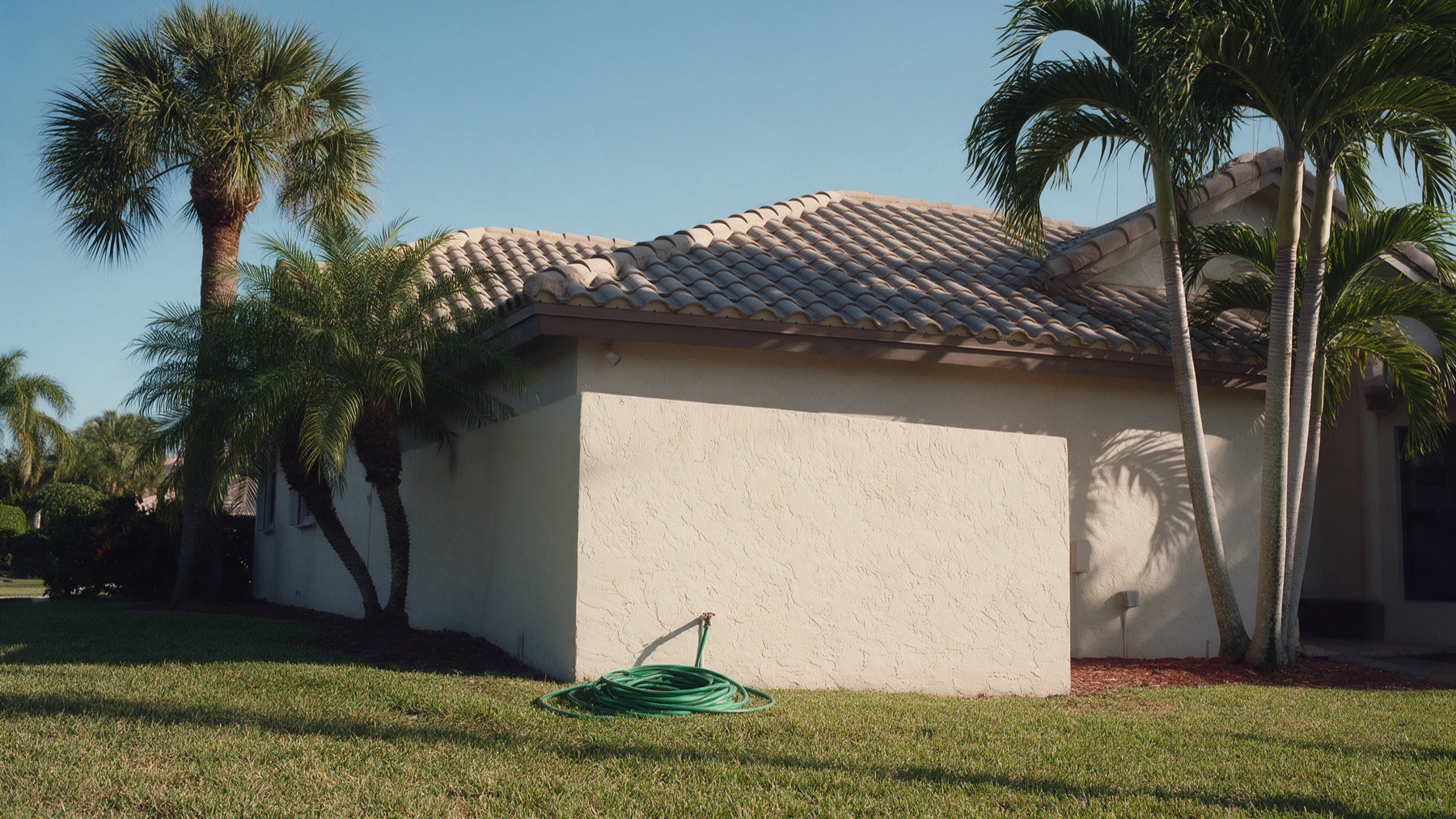
Some Miami roof leaks only show up in a hard, sideways rain. By the time a storm arrives you cannot tell where the water is getting in, and by the next dry day there is nothing to see. A hose test lets you recreate the rain on purpose, one small zone at a time. Done badly it is dangerous and can make the leak worse. This guide covers a water hose test for a roof leak in Miami that keeps you on the ground, so you can narrow down where to point a roofer.
Quick answer: A hose test works by wetting one small zone of the house at a time, lowest first, while a helper watches the ceiling or attic below. When water appears, you know which zone is letting it in. Do it from the ground with a gentle flow, never on the roof, and stop and call a licensed roofer if the first zone does not show the problem.
What you'll need
- A garden hose long enough to reach the walls and eaves from the ground
- A nozzle set to a soft shower or flood setting, not a jet
- A helper to watch inside, on a flat floor or in the attic hatch area
- Two phones, so you can talk without shouting
- A notebook, a pencil and painter's tape
- Towels and a bucket for under any active drip
- Binoculars or your phone camera for a look at the roof first
Step by step
- Pick a dry, calm morning. Skip days with wind, thunder or rain in the forecast. Early is better, because the heat and afternoon storms come later.
- Look first. From the yard, scan the roof with binoculars. Note missing or slipped tile, a lifted shingle, a cracked pipe boot, or debris packed into a valley. Photograph what you see. Our attic leak guide pairs well with this step.
- Shut off power near the stain. If the leak is near a light fixture, fan or outlet, turn that circuit off at the panel before your helper goes underneath.
- Set up your helper. They stand inside under the stain, or in the attic if it is safe to enter early in the morning. They watch for water, dampness, drips or a darkening on the ceiling and tell you at once.
- Divide the house into zones. Think low to high: the wall under the eave, then the eave itself, then any window or door head, then a chimney or wall that meets the roof. Write the order in your notebook.
- Start at the lowest zone. Wet only that area, keeping the stream gentle. Hold it on that spot for about ten minutes while your helper watches. Raveis's step-by-step advice for homeowners makes the same point: start low, keep the flow soft and move up gradually.
- Move up one zone at a time. Only move on after the helper has reported nothing for the full time. Spraying everywhere at once tells you nothing, because water runs and can come out elsewhere.
- If water appears, stop the hose. Write down exactly which zone you were wetting, how long it took, and where it showed up inside. Photograph the spot.
- Dry it out and repeat once. Let the area dry, then test that same zone again to confirm. One drip you cannot repeat is a hint, not an answer.
- Report what you found. Hand the notes and photos to a roofer. A clear "it shows up after ten minutes on the east wall under the eave" saves them time.
What the hose can and cannot reach
A garden hose from the ground reaches the lower part of a typical single-story Miami house. It will not reach most ridges, upper valleys or the middle of a flat roof. That is a real limit.
| What you can test from the ground | What you cannot test safely |
|---|---|
| Wall-to-roof joints on a single-story section | Ridge caps and hips |
| Window and door heads under the eave | Valleys high on the roof |
| Eave edges and the fascia | The middle of a flat roof behind a parapet |
| Walls around a Florida room | Skylights above your reach |
| Pipe or vent outlets that stick up near the edge | Anything that needs you to stand on the roof |
If your leak is in the right-hand column, a hose test from the ground will not find it, and that is useful to know. That points to a roofer with proper access, not to a ladder trip of your own.
Why a hose test fits Miami roofs
Miami storms push water sideways, not just down. The result is that water hits walls, window heads and the joint where a wall meets a roof, which a gentle ground-level hose can reproduce. Our post on wind-driven rain leaks covers why that happens.
On a clay or concrete tile roof, the tile mostly sheds water and the underlayment beneath it is the real barrier. Research on tile roofs in extreme wind notes that once tiles shift or detach, the job of keeping water out falls to the underlayment and flashing. That means a tile roof can look fine from the ground and still leak at one point, so the hose test is about narrowing a zone, not proving the tile is sound.
The flat section behind a parapet is a frequent Miami leak point, and a ground hose cannot reach it. If your stain sits under a flat area, skip the hose and have a roofer look. If the stain is not clearly tied to rain, use our guide to telling a roof leak from an AC or plumbing leak first.
Common mistakes
- Using a jet or a pressure washer. Forcing water up under tile or shingles can push it where rain would never go and create a leak that was not there. Keep the flow soft.
- Spraying everything at once. If you wet the whole house, you will know it leaks but not where.
- Testing a house that is already soaked. If the ceiling is wet or sagging, stop. Water that is already in the ceiling will fool the test.
- Wasting water. The county's outdoor water restrictions cover lawn watering, and the page does not address a short test like this one. Keep each zone to about ten minutes and check with the county if you are unsure.
Safety first
Safety first. Do not get on the roof for this test. Walking on tile cracks it and creates the leak you were looking for, and a Miami roof surface in the sun can exceed 150°F. Never spray water toward power lines, the service drop, the meter or an electrical panel, and keep the hose away from any wiring. Never test in wind, rain or with thunder nearby. If you use a ladder at all, for example to reach a high attic hatch, set it on firm, level ground with the base about one foot out for every four feet of height, keep the side rails at least 3 feet above the upper edge, face the ladder and keep a hand on it, and have a second person hold it. Those figures come from OSHA's ladder standard, 29 CFR 1926.1053. Never use a ladder on wet ground or in wind. Do the test early in the day to avoid heat illness.
Stop and call a licensed roofer if…
- Water appears in the first zone you test and you cannot tell why
- You see missing, cracked or slipped tile, lifted shingles or a damaged pipe boot from the ground
- The ceiling is bulging, sagging or dripping steadily
- You see daylight, soaked insulation or wet framing in the attic
- The leak sits under a flat roof area, a skylight, a chimney or a valley, which the hose cannot reach
- Water is near wiring, a fixture or a fan
- The hose test finds nothing but the stain keeps coming back after rain
- You smell mold or the drywall feels soft
In Miami-Dade, roof work is covered by the Florida Building Code, and the High Velocity Hurricane Zone has its own product and inspection rules. Check with the county building department about whether a particular repair needs a permit, and have it pulled by the licensed contractor. Our HVHZ guide explains the basics. Do not patch the roof yourself.
FAQ
Can a hose test make a roof leak worse?
Yes, if you use a hard jet, a pressure washer or you spray upward under tile. A gentle shower at the wall or eave is much lower risk.
How long should I run the hose in each spot?
About ten minutes is a common starting point, and your helper should keep watching a little after you stop. Water can take a while to travel through underlayment and framing.
Do I need to be on the roof to do a hose test?
No, and you should not be. This version stays on the ground. Professionals work on the roof with fall protection and training you do not have.
What if the hose test shows nothing?
It tells you the leak is probably not in the zones you could reach. It does not mean the roof is fine. A roofer can check ridges, valleys, flat sections and skylights.
Will a hose test affect my insurance claim?
Check your policy and talk to your agent or carrier about notice requirements. This is not insurance advice.
Get it looked at
If the stain follows the rain and the hose does not show you why, we can look at the roof and tell you straight, including when the answer is a small repair. See our roof repair page and the Miami-Dade planning ranges for what repairs generally involve. Book a free roof assessment at https://calendly.com/karmacgroup/30min or call 305-419-0890.
Sources
MIA Roofers · Roofing performed by Premier Group, Florida Certified Roofing Contractor CCC1332855. This guide is general information, not an inspection of your roof.