Home › Service Areas › City of Miami
Roofing in the City of Miami
The City of Miami permits its own roofing work, adds historic review in several neighbourhoods, and contains just about every kind of roof in the county within a few square miles.
Home › Service Areas › City of Miami
The City of Miami permits its own roofing work, adds historic review in several neighbourhoods, and contains just about every kind of roof in the county within a few square miles.
City of Miami at a glance
The City spans an unusually wide range of building stock for its size. Little Havana, Shenandoah and Coral Way are dense with 1920s–1940s masonry vernacular carrying original clay barrel tile and low-slope flat sections behind parapets — roofs where the tile is often still serviceable and the underlayment beneath it long past its life. Allapattah, Overtown and parts of Little Haiti run to post-war concrete block with flat or shallow-pitch roofs.
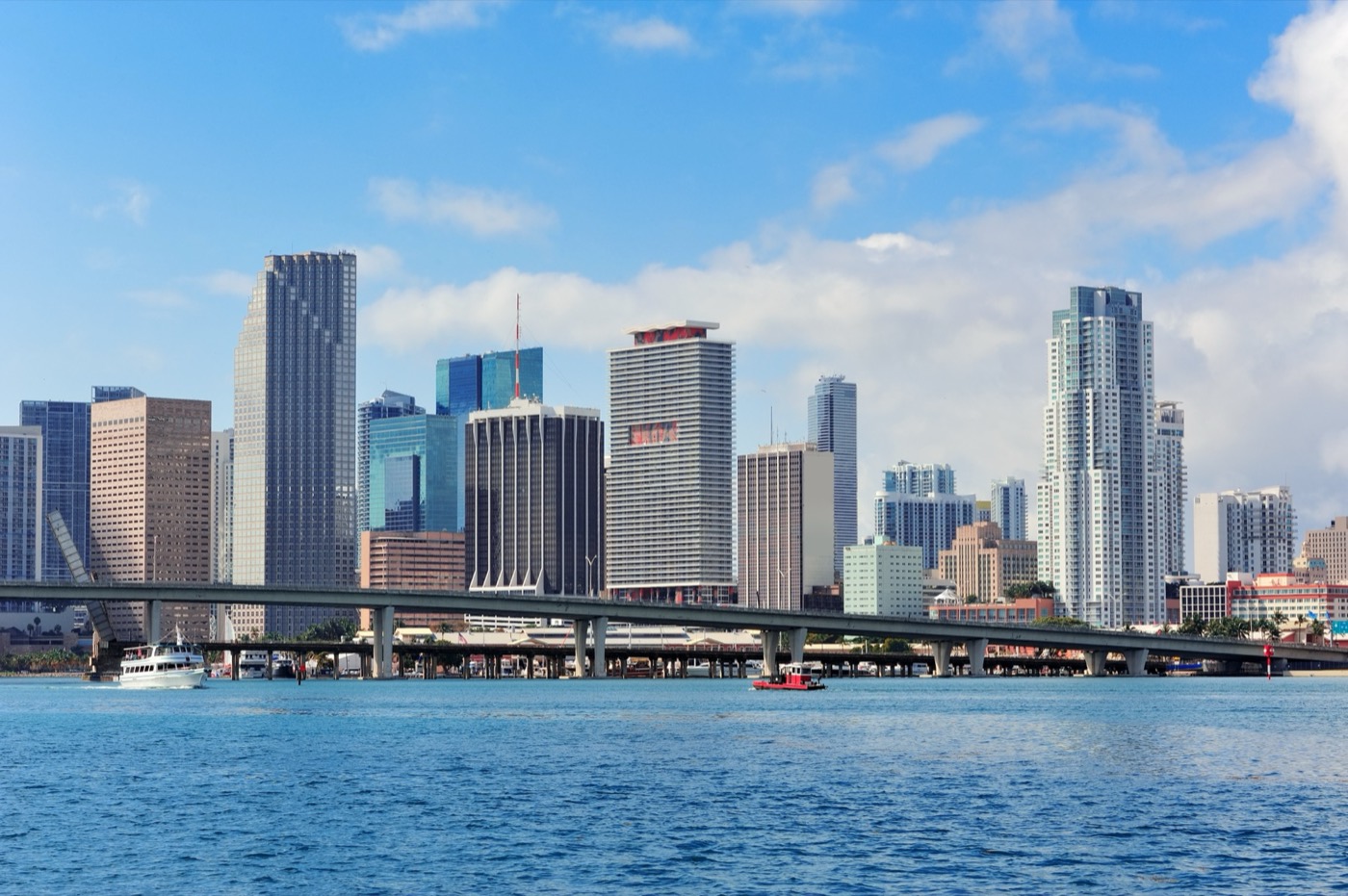
Brickell, Edgewater and Downtown are a different problem entirely: mid- and high-rise, low-slope, with dense rooftop mechanical plant, restricted access, and building management requiring staging plans and after-hours agreements before anyone lifts a pallet. Wynwood and the Design District sit in between — converted warehouse stock with large single-plane low-slope roofs, frequently on their third or fourth covering.
The City of Miami runs its own building department, plan review and inspection scheduling, separate from the County. Permits are filed through the City's own portal, and the City adds historic and design review layers in several neighbourhoods that the County does not.
A roofing permit is required for replacement and for repairs above the City's threshold. It is filed by the licensed contractor, in the contractor's name. Properties in a historic district or with a designated structure add a preservation review step before the permit issues.
Pull it in the roofer's name. If a contractor asks you to take the permit out as the owner, they are moving liability for the work onto you. That is a reason to pick someone else.
The City enforces the Florida Building Code, 8th Edition (2023), including the High Velocity Hurricane Zone provisions that apply throughout Miami-Dade. The 9th Edition (2026) takes effect 31 December 2026. Product approval is by Miami-Dade County Notice of Acceptance, which is countywide regardless of which city issues the permit.
Miami-Dade and Broward are the only two counties in the country designated a High Velocity Hurricane Zone. The HVHZ provisions of the Florida Building Code are a stricter, separate rulebook: products need their own approval, the deck has to be sealed, attachment is tested in the field, and there are more inspections. A roofing spec that is perfectly legal in Orlando or Tampa can be non-compliant here without a single word changing on the page.
A Notice of Acceptance is Miami-Dade County Product Control's approval of a specific product in a specific assembly. Underlayment, tile, fasteners, adhesive, edge metal — each carries its own NOA, and the NOA specifies how it may be installed. NOAs carry expiration dates and have to be renewed by the manufacturer. You can look any of them up yourself on the County's product approval search. Installing a product without a current NOA is a code violation that can mean a failed inspection and a tear-off at the contractor's cost.
The HVHZ requires a sealed roof deck: a continuous secondary barrier under the primary roof covering, so that if the tile or shingle comes off in a hurricane the building still does not take on water. In practice that is a self-adhered polymer-modified bitumen membrane meeting ASTM D1970 with a current NOA, or an approved combination such as 4-inch self-adhering tape over every deck joint followed by an approved base sheet. The permit holder signs an Affidavit of Compliance for roof deck attachment and the secondary water barrier, and hands it to the inspector at the first inspection.
On mortar-set and adhesive-set tile, the code requires a field uplift test to TAS 106 after installation and before the final inspection — a real, physical pull test confirming the tile resists a minimum uplift load. It is one of the few places in American construction where the inspector verifies the installed result rather than the paperwork. Ask any bidder how many pulls they budget for.
A roof in the City of Miami is permitted by the City of Miami Building Department through the City's own portal, with the City's fee schedule and the City's inspection queue. Product approval is still by Miami-Dade County NOA, which is countywide — but the permit, the plan review and the inspector are the City's. A contractor who only works unincorporated Dade will feel the difference.
The City has a substantial number of historic districts and individually designated structures, and roofing work that changes what is visible from the street — tile profile, tile colour, a change of covering type, metal finish — commonly needs preservation review before the permit issues. It is weeks rather than days. On a designated property in Morningside, Spring Garden or Buena Vista, plan the review into the schedule rather than discovering it after you have signed.
Much of the City sits in a designated flood zone, and while roofing is not itself flood work, substantial improvement rules can pull other requirements into a project once the total value of work crosses a threshold within a period. It rarely bites a straightforward reroof. It does bite when the roof is one part of a larger renovation, and it is much cheaper to know that at the design stage.
On a Brickell or Edgewater building the roofing is often the simplest part. Crane or hoist placement, right-of-way occupancy, elevator and freight scheduling, after-hours noise agreements and building management approval routinely take longer than production. Those get scoped up front, because discovering them mid-job is how a two-week roof becomes a two-month roof.
The City carries the standard HVHZ sequence — deck nailing, tin cap, secondary water barrier affidavit, in-progress, and final, with a TAS 106 uplift test on mortar- and adhesive-set tile. Scheduling queue is the most common cause of a roof sitting dried-in longer than planned.
| System | Installed cost / sq ft | Typical service life | Notes |
|---|---|---|---|
| Architectural asphalt shingle | $7 – $12 | 15–25 yrs | The budget option in Miami-Dade. Shortest service life of anything here — UV and heat are brutal on asphalt. |
| Concrete tile (flat or profiled) | $14 – $24 | 30–50 yrs | The South Florida default. Heavy — the structure has to be able to carry it. |
| Clay barrel tile | $18 – $30 | 40–75 yrs | Coral Gables, Coconut Grove and most of the historic stock. Highest material cost, longest life. |
| Standing-seam metal | $15 – $26 | 30–50 yrs | Gaining share fast on coastal property. Best wind performance per dollar; watch the fastener and clip spec near salt air. |
| Modified bitumen, 2-ply (low-slope) | $9 – $16 | 15–25 yrs | The standard flat-section system here — including the flat runs behind a tile parapet. |
| TPO single-ply (low-slope) | $9 – $17 | 20–30 yrs | Reflective. Common on commercial, small multifamily and larger flat residential sections. |
| Silicone restoration coating | $4 – $8 | 10–20 yrs | Only over a sound, dry substrate, and only where the existing system is not already at the layer limit. |
How to read these. Ranges are Miami-Dade market pricing for planning and budgeting, not a quote. Real numbers move with roof geometry and pitch, how much deck has to be replaced once the tile is off, the secondary water barrier the HVHZ requires, tear-off depth, access and staging, and how many squares of tile can be salvaged and reset versus supplied new.
| Item | Typical range | Notes |
|---|---|---|
| Roof repair (single-source leak) | $650 – $4,500 | Most isolated leaks land in the high three to low four figures. A chronic leak needs a survey, not a patch. |
| Roof inspection / condition report | Free – $600 | Ours is free. A wind mitigation inspection for your insurer is a separate, licensed report and usually $75–$175. |
| Plywood / deck replacement | $70 – $130 per sheet | Nobody can see the deck until the roof is off. Get this as a stated unit price in the contract, not a change order. |
| Secondary water barrier (HVHZ) | $1 – $2.50 / sq ft | Not optional in Miami-Dade. If a bid does not mention it, the bid is not code-compliant. |
| Tile salvage and reset | $4 – $8 / sq ft | Cheaper than new tile and often the only way to match a discontinued profile. Expect 15–25% breakage. |
| Permit and inspection fees | 0.5% – 2% of job value | Varies by municipality. Miami-Dade and each city set their own schedule. |
| Skylight replacement | $900 – $3,500 each | Replace during a reroof, never after. An old curb under a new roof is a guaranteed callback. |
How to read these. Ranges are Miami-Dade market pricing for planning and budgeting, not a quote. Real numbers move with roof geometry and pitch, how much deck has to be replaced once the tile is off, the secondary water barrier the HVHZ requires, tear-off depth, access and staging, and how many squares of tile can be salvaged and reset versus supplied new.
The City of Miami Building Department, through the City's own permitting portal — not Miami-Dade County. The permit is filed by the licensed contractor in the contractor's name. Product approvals (NOAs) are issued by Miami-Dade County Product Control and apply countywide regardless of who issues the permit.
Architectural shingle generally runs $7 to $12 per square foot installed, concrete tile $14 to $24, clay barrel tile $18 to $30, and standing-seam metal $15 to $26. On a typical single-family home that is roughly $14,000 to $26,000 for shingle and $35,000 to $70,000 or more for clay tile. Older City neighbourhoods often add deck replacement, which is priced per sheet.
If the property is in a historic district or is individually designated, and the work changes what is visible from the street, then usually yes — and it comes before the permit. Tile profile and colour are the usual points of review. It is weeks rather than days, so it belongs in the schedule from the start.
Frequently, and in Little Havana, Shenandoah and Coral Way it is often the right answer. The tile is removed carefully, the underlayment is fully replaced, and the original tile goes back on. Expect 15 to 25 percent breakage, covered by new tile on the least visible elevation.
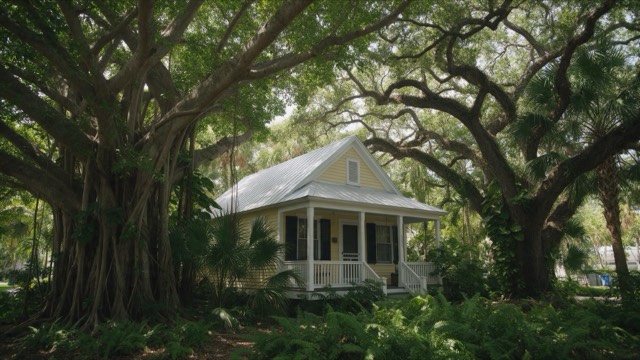 Coconut GroveHeavy canopyHistoric reviewThe oldest continuously inhabited neighbourhood in Miami, the densest tree canopy in the City, and a building stock that runs from 1890s wood frame to new construction on the same block.Read more →
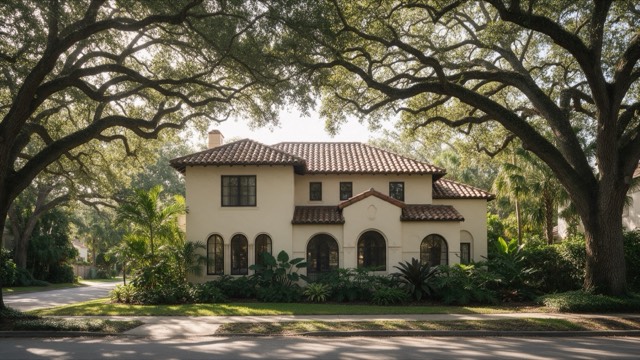 Coral GablesBoard of ArchitectsClay barrel tileThe most design-regulated city in Miami-Dade, and the one where the roof is the most visible architectural element on the building.Read more →
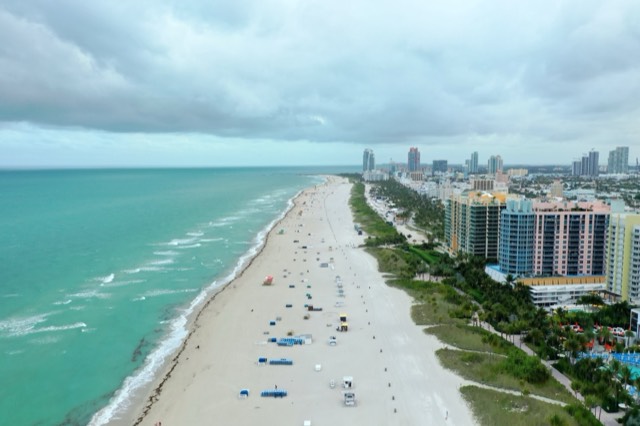 Miami BeachHistoric districtSalt airA barrier island with the densest concentration of protected architecture in Florida and the most aggressive corrosion environment in the county.Read more →
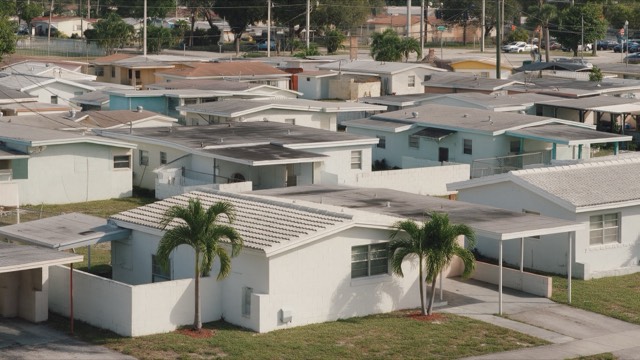 HialeahFlat sectionsUnpermitted additionsMiami-Dade's second-largest city, built fast and built dense, with an enormous stock of post-war concrete-block housing now well into reroof territory.Read more →
Twenty minutes on site in Miami. A written report with photos and numbers. No obligation.
Pick a time on the calendar. We walk the roof, photograph what we find, and send a written report with real numbers.
Pick a time that suits you — 30 minutes, no obligation.
Active leak? Call 305-419-0890 instead; that gets triaged the same day.