Straight answers
Questions we get before the first call.
How much does a new roof cost in Miami?
For a typical single-family home: architectural shingle roughly $14,000 to $26,000, concrete tile $28,000 to $50,000, standing-seam metal $30,000 to $55,000, and clay barrel tile $35,000 to $70,000 or more. The full breakdown per square foot, and what drives the number, is on our Miami roof cost page.
Do I need a permit to replace my roof in Miami-Dade?
Yes, everywhere in the county — and it should be pulled by the licensed contractor in the contractor’s name. If a roofer asks you to pull the permit yourself, they are moving the code liability onto you. In Florida that is a well-recognised warning sign.
My tile roof looks fine but it is 25 years old. Do I need a new roof?
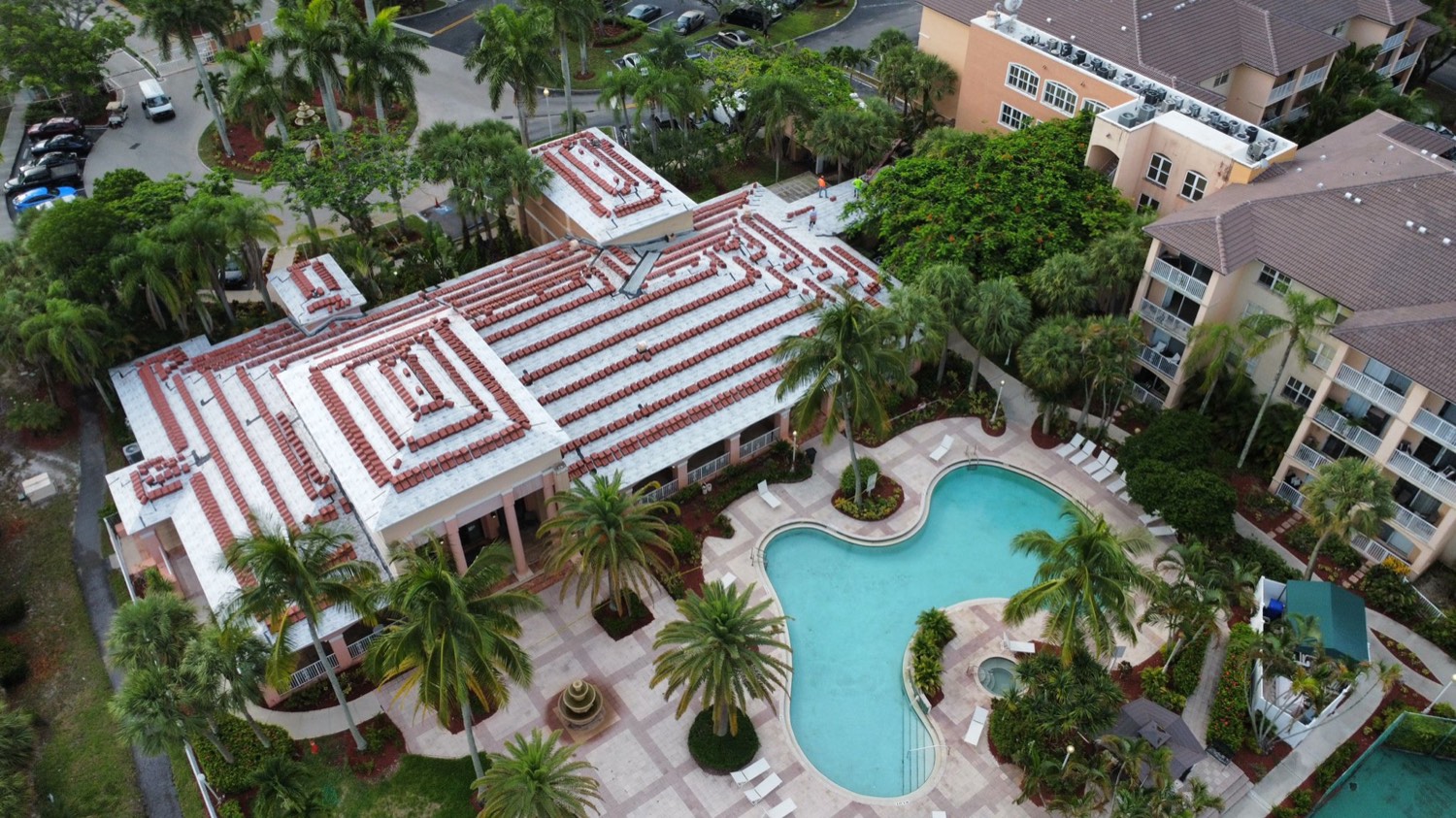
Probably new underlayment, not new tile. Tile is a wind and UV shield; the underlayment beneath it is what actually keeps water out, and it has a fraction of the tile’s service life. The usual scope is to salvage and stack your existing tile, replace the underlayment to current HVHZ standard, re-nail the deck, and reset your original tile.
My insurance company says my roof is too old. What are my options?
Roof-age non-renewal is now routine in Florida. The realistic options are to replace the roof, move to a carrier with different underwriting, or in some cases the state-backed insurer of last resort. A roof replaced to current HVHZ standard, fully permitted, with a wind mitigation inspection afterwards, is the strongest underwriting position available to you.
Why is roofing more expensive in Miami than elsewhere in Florida?
Because Miami-Dade is a High Velocity Hurricane Zone. Every product needs its own county approval, the whole deck is sealed with a secondary water barrier, the deck is re-nailed to the current attachment schedule, and the county inspects five times rather than two. Those are real requirements, not markup.
How do I check that a roofer is actually licensed in Florida?
Look the licence number up at myfloridalicense.com — it is free and public and takes a minute. A Certified Roofing Contractor (CCC) may work anywhere in the state. Confirm the name on the licence matches the name on your contract and on the permit application.
Do you handle insurance claims?
We inspect, document with dated photographs, write a clear scope, and meet your adjuster on the roof. We do not negotiate or adjust claims and we do not interpret your policy — those are licensed activities in Florida, and we will tell you when you need a public adjuster rather than us.
How soon can someone look at my roof?
Usually within a day or two for a scheduled assessment. If you have an active leak, call rather than filling in the form — that gets triaged differently.