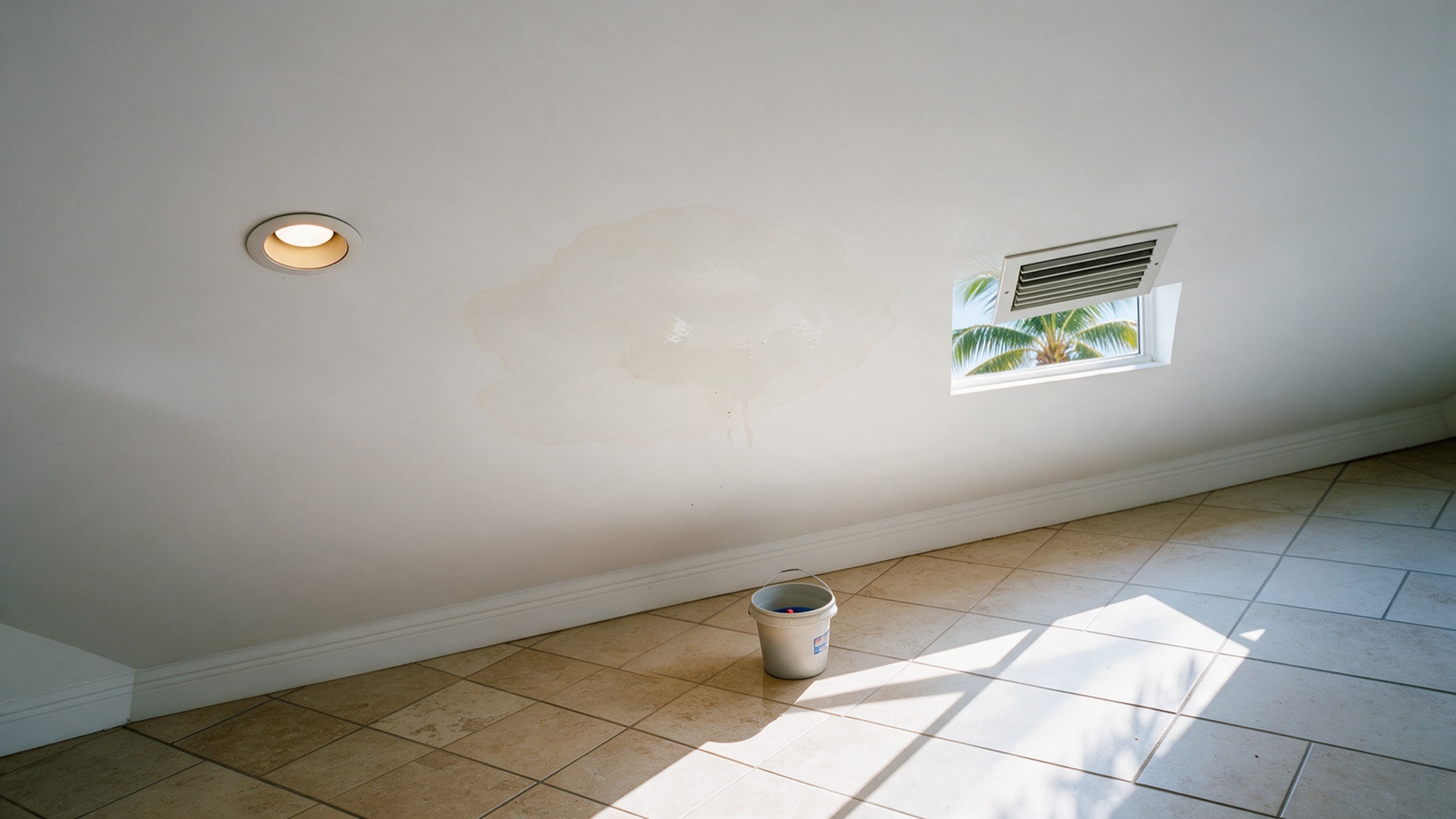
A brown ring appears on the ceiling after an afternoon storm, and the first thought is the roof. Sometimes that is right. In a Miami house it is just as often the air conditioner or a water line, and paying for the wrong repair does not stop the stain. This guide shows how to work out whether a ceiling stain after rain is a roof leak, an AC problem or plumbing, using checks you can do from the floor.
Quick answer: A stain that shows up only after rain, and gets worse in wind-driven storms, points to the roof. A stain that grows on dry days while the AC runs points to the condensate drain or a cold duct. A stain that changes when someone showers, flushes or runs the dishwasher points to plumbing. Note the timing, photograph it, and do not climb onto the roof to check.
What you'll need
- Your phone, for dated photos
- A pencil and a tape measure
- A flashlight
- A notebook or notes app for a simple timing log
- Painter's tape, to mark the edge of the stain
- A bucket and towels, in case it is actively dripping
Step by step
- Mark the stain. Trace the edge with a pencil, write the date beside it, and photograph it with the tape measure in frame. A ring that grows past the pencil line tells you it is still active.
- Write down when it appeared. Did it show up during or right after rain? Or after a dry stretch? The timing is the strongest clue you have.
- Check the weather log. Match each change in the stain to rain, wind direction and how hard it fell. A stain that only grows when rain comes from one direction is usually a roof or wall entry, as our guide to wind-driven rain leaks explains.
- Check the AC. Note whether the stain sits under or near an air handler, a supply duct or a return. Watch whether it grows on hot, dry days when the system runs for long periods.
- Run the plumbing, one fixture at a time. If a bathroom, kitchen or laundry is above the stain, use each fixture on its own for a few minutes and watch the ceiling. Stop if you see drips.
- Look at the room above. Check the floor for dampness, soft spots, a swollen baseboard, or a discolored grout line near a tub or toilet.
- Touch and smell it. A damp stain with a musty smell has been wet for a while. Do not poke through wet drywall.
- Check the ground-level view of the roof. From the yard, use binoculars or phone zoom to look for missing or slipped tile, lifted shingles, a damaged pipe boot or debris in a valley. Stay on the ground.
- Keep a three-day log. Record what happened each day: rain, AC runtime, showers. Patterns show up quickly.
- Bring the log and photos to the right person. Roofer for rain-linked stains, AC technician for dry-weather stains near equipment, plumber for stains that follow fixtures.
How the three causes usually differ
| Clue | Roof leak | AC condensate or duct | Plumbing |
|---|---|---|---|
| When it grows | During or after rain | On dry days while the AC runs | When fixtures are used |
| Where it sits | Often below a roof feature, but offset from it | Under or near an air handler, duct or drain line | Below a bathroom, kitchen or laundry |
| Water feel | Rusty or brown, may smell musty | Often clear, sometimes with slime or rust | Clear, may drip steadily |
| Dry weather | Stain stops growing | Stain keeps growing | Stain follows usage, not weather |
None of these is a diagnosis. Two causes can overlap, and a stain can be old water that dried and came back when humidity rose.
Why Miami makes this harder
Miami homes carry a lot of moisture in the air. Cold AC ducts and air handlers in a hot attic form condensation, and a clogged condensate drain can overflow into the ceiling. That water can look just like a roof leak, and it can start on a day when it has not rained for a week.
The roof side is tricky too. On a clay or concrete tile roof, the tile sheds most water but the underlayment under it is what keeps the house dry, and that layer ages out long before the tile does. Water can enter at one point, run along the deck or a rafter, and drip somewhere else. That is why the stain is rarely right under the entry point. Our guide on finding a leak from your attic shows how to trace it uphill.
The flat section behind a parapet, or over a Florida room, is another frequent culprit. If your stain is under a flat area, check whether water stands on it after storms and bring that up with a roofer. Our flat roof replacement page explains what a pro looks at there.
What not to do
Do not paint over the stain to see if it comes back. Paint hides evidence you need, and it traps moisture. Do not cut into the ceiling. If it is bulging with water, keep clear of it, put a bucket underneath and call a pro. Do not go up on the roof to look for the source. Walking on tile cracks it and creates the leak you were looking for, and a Miami roof surface in the sun can be hot enough to hurt you.
Safety first
Safety first. Stay off the roof. Everything here can be done from inside the house or from the ground. If water is dripping near a light fixture, a ceiling fan or an outlet, switch off the power to that circuit at the panel before you go near it. If you use a ladder to reach a high ceiling or the attic hatch, set it on firm, level ground at about a 4-to-1 angle, keep three points of contact, and have a second person hold it. Do not use a ladder in wet or windy weather. Stay well away from power lines and the service drop at the roof edge. Go into a hot attic early in the day, if at all, because heat illness is a real risk, as OSHA's attic factsheet notes.
Stop and call a licensed roofer if…
- The stain appears or grows only after rain, or only in wind-driven rain
- You see daylight, a hole or soaked insulation in the attic
- The ceiling is sagging, bulging or dripping steadily
- Several stains appear in different rooms
- You see missing, slipped or cracked tile, or a damaged pipe boot from the ground
- The stain sits below a skylight, chimney, valley or the flat section behind the parapet
- Water is near wiring, a fixture or a fan
- You smell mold, or the drywall feels soft
- You cannot tell whether the cause is the roof, the AC or plumbing
In Miami-Dade, roof work is covered by the Florida Building Code, and the High Velocity Hurricane Zone has its own product and inspection rules, so check with the county building department about whether a particular repair needs a permit. The permit should be pulled by the licensed contractor. Our HVHZ guide explains the basics. Do not patch the roof yourself.
FAQ
How do I know if a ceiling stain is a roof leak or an AC leak?
Check the timing. A roof leak follows rain. An AC drain problem follows runtime, so it can grow in dry weather. A stain next to an air handler or a duct is a good hint for the AC. If you cannot tell, an AC technician can check the condensate drain, and a roofer can check the roof.
Can a ceiling stain be old?
Yes. A stain can be from an old leak that was fixed or dried out. Mark the edge and watch it for a few weeks. If it does not change, it may be old, but get it looked at if you are unsure, because moisture can hide in the ceiling.
Does a brown stain mean mold?
Not by itself. Brown usually means water carried dirt or rust through the drywall. Mold needs prolonged moisture. If you see fuzzy growth or smell mustiness, stop and call a pro.
Should I tell my insurance company?
Check your policy and talk to your agent or carrier about notice requirements. This is not insurance advice. Photos with dates, and your timing log, will help whoever looks at it.
What will a roof repair cost?
It depends on the cause and the roof type. Our Miami-Dade roof cost planning ranges are a starting point, but a roofer must see the roof before quoting. A written roof repair estimate should say what is being fixed and why.
Get it looked at
If your stain follows the rain, we can look at the roof and tell you straight, including when the roof is fine and the answer lies elsewhere. Book a free roof assessment at https://calendly.com/karmacgroup/30min or call 305-419-0890.
Sources
MIA Roofers · Roofing performed by Premier Group, Florida Certified Roofing Contractor CCC1332855. This guide is general information, not an inspection of your roof.