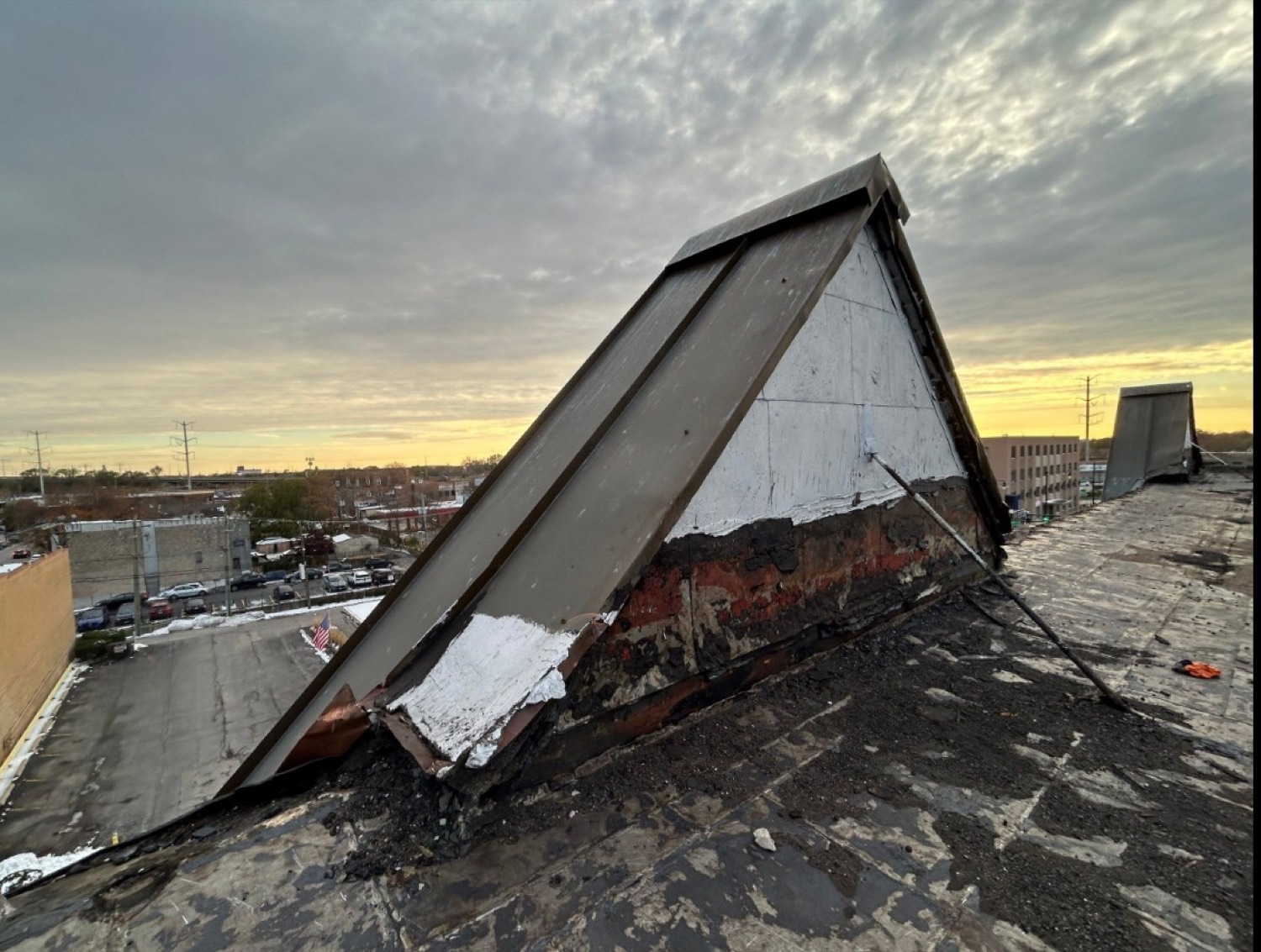
We are roofing contractors. We are not public adjusters and we are not attorneys, and Florida law is specific about what each of those can do. What a roofer can legitimately do is inspect the roof properly, document what is actually there, and give you and your adjuster an accurate written picture of the damage and what repairing it requires.
That turns out to be most of what decides a claim. Most disputes we see are not bad faith — they are an adjuster working from an incomplete picture because nobody put a complete one in front of them.
This is the term on your policy that most affects what you receive, and most homeowners do not know which one they have until they claim. Replacement cost pays what it costs to replace the roof today. Actual cash value pays that, minus depreciation for the roof's age — which on a fifteen-year-old roof can be a very large deduction.
Florida carriers have moved steadily toward actual cash value settlements on older roofs. It is worth finding out which you have before a storm, not after, because it changes whether you should be replacing the roof on your own schedule.
Non-renewal because of roof age is now routine in Florida, and it commonly arrives with a specific demand: a roof with a stated remaining life, or a four-point inspection the current roof will not pass.
A roof replaced to current HVHZ standard — re-nailed deck, sealed secondary water barrier, approved covering, fully permitted and inspected — is the strongest position you can be in for both underwriting and wind mitigation credits. What matters as much as the work is that the documentation exists in a form an underwriter and a mitigation inspector can actually use.
We can inspect the roof, document conditions with photographs, provide a written scope and estimate of what the repair or replacement requires, meet your adjuster on site, and explain what we found and why. That is normal contractor work and it is genuinely useful.
We cannot negotiate or adjust your claim on your behalf, interpret your policy for you, or advise you on coverage. In Florida those are licensed activities — a public adjuster or an attorney. If a roofer offers to handle your claim end to end, ask what licence they hold to do that.
| Item | Typical range | Notes |
|---|---|---|
| Roof repair (single-source leak) | $650 – $4,500 | Most isolated leaks land in the high three to low four figures. A chronic leak needs a survey, not a patch. |
| Roof inspection / condition report | Free – $600 | Ours is free. A wind mitigation inspection for your insurer is a separate, licensed report and usually $75–$175. |
| Plywood / deck replacement | $70 – $130 per sheet | Nobody can see the deck until the roof is off. Get this as a stated unit price in the contract, not a change order. |
| Secondary water barrier (HVHZ) | $1 – $2.50 / sq ft | Not optional in Miami-Dade. If a bid does not mention it, the bid is not code-compliant. |
| Tile salvage and reset | $4 – $8 / sq ft | Cheaper than new tile and often the only way to match a discontinued profile. Expect 15–25% breakage. |
| Permit and inspection fees | 0.5% – 2% of job value | Varies by municipality. Miami-Dade and each city set their own schedule. |
| Skylight replacement | $900 – $3,500 each | Replace during a reroof, never after. An old curb under a new roof is a guaranteed callback. |
How to read these. Ranges are Miami-Dade market pricing for planning and budgeting, not a quote. Real numbers move with roof geometry and pitch, how much deck has to be replaced once the tile is off, the secondary water barrier the HVHZ requires, tear-off depth, access and staging, and how many squares of tile can be salvaged and reset versus supplied new.
These apply throughout Miami-Dade County. Permitting and local specifics are on each service area page, and the full picture is on the HVHZ code page.
Effective 26 May 2022. Where the existing roof complied with the 2007 Florida Building Code or later, damage crossing the 25 percent threshold no longer forces full replacement — only the repaired portion has to meet current code. The permit date is the evidence.
A claim-funded repair is roofing work like any other. It needs a permit where the scope requires one, NOA-approved materials, and the inspection sequence. An unpermitted claim repair creates problems at resale and on the next claim.
Deck attachment, roof-to-wall connection, covering approval and geometry are recorded on the Florida wind mitigation form by a licensed inspector. Work that is not documented cannot be credited, which is a common quiet loss.
Florida has substantially restricted assignment of benefits for property claims in recent years. Be very careful with any contract that transfers your claim rights, and read it away from whoever handed it to you.
The rule that decides most jobs: Miami-Dade and Broward are the only two counties in the country designated a High Velocity Hurricane Zone. The HVHZ provisions of the Florida Building Code are a stricter, separate rulebook: products need their own approval, the deck has to be sealed, attachment is tested in the field, and there are more inspections. A roofing spec that is perfectly legal in Orlando or Tampa can be non-compliant here without a single word changing on the page.
If the damage is from a covered peril such as wind or a named storm, generally yes, subject to your deductible and to whether your policy pays replacement cost or actual cash value. Damage from age, wear or deferred maintenance is not covered by any standard policy, and that distinction is where most claims are decided.
Start by reading the denial letter for the stated reason, because that determines everything you do next. If the denial rests on a factual finding about the roof — that damage is wear rather than storm, for instance — an independent, properly documented inspection is the relevant response. If it rests on policy interpretation, that is a question for a public adjuster or an attorney, not a roofer.
We can inspect the roof, document it thoroughly with dated photographs, write a clear scope and estimate, and meet your adjuster on the roof. We cannot negotiate or adjust the claim, or advise you on your policy — those are licensed activities in Florida and we will tell you when you need a public adjuster instead of us.
Roof-age non-renewal is now routine in Florida. The options are generally to replace the roof, to move to a carrier with different underwriting, or in some cases the state-backed insurer of last resort. A roof replaced to current HVHZ standard with full documentation and a wind mitigation inspection is the strongest underwriting position available to you.
It commonly helps, through wind mitigation credits tied to documented characteristics — covering approval, deck attachment, roof-to-wall connections and geometry. How much depends on your carrier and your existing credits. We are not licensed to quote a premium, and any roofer who promises a specific saving is guessing.
Twenty minutes on site. A written report with photos and numbers. No obligation.
Pick a time on the calendar. We walk the roof, photograph what we find, and send a written report with real numbers.
Pick a time that suits you — 30 minutes, no obligation.
Active leak? Call 305-419-0890 instead; that gets triaged the same day.