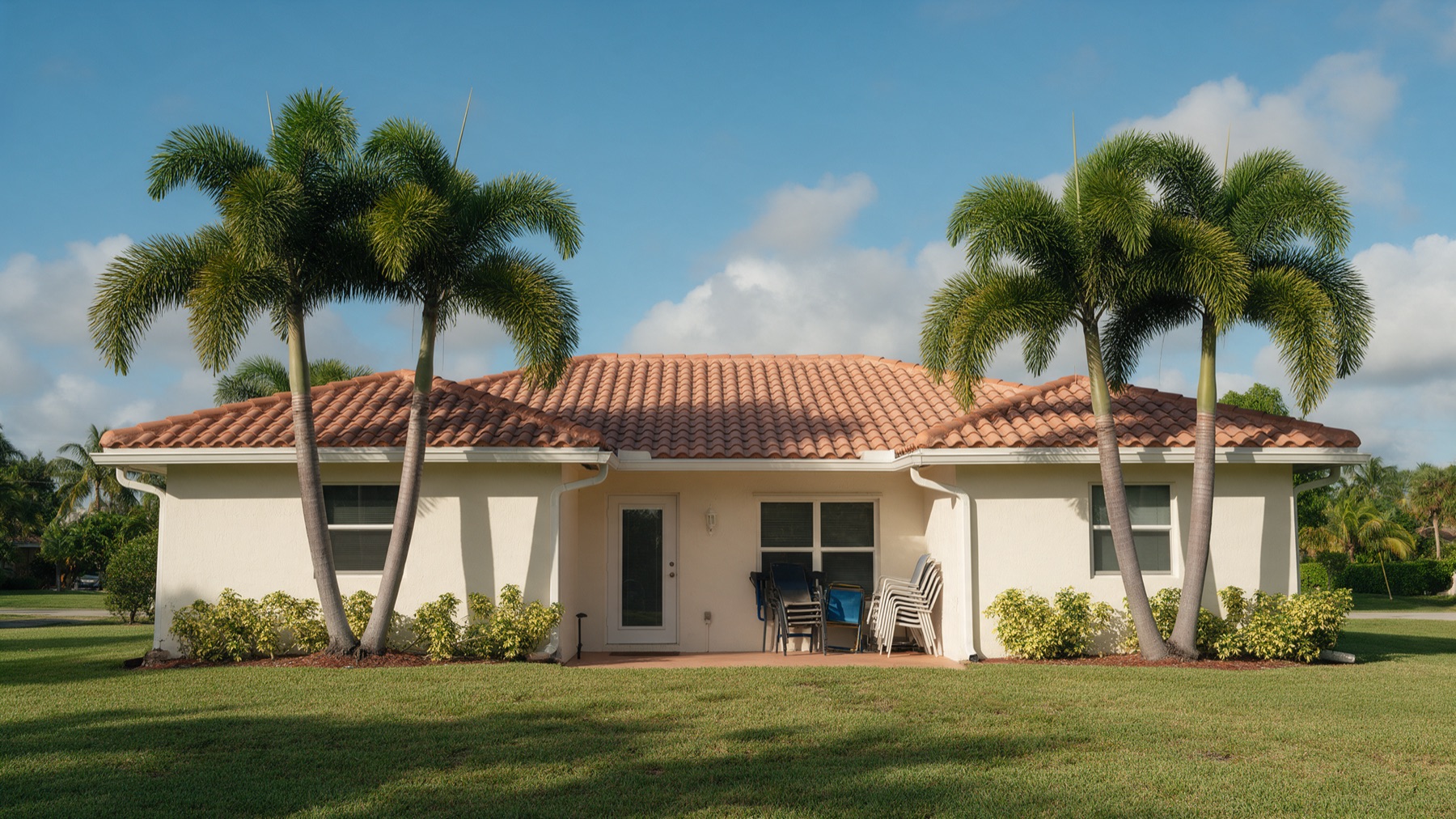
Atlantic hurricane season runs from June 1 to November 30, and the roof is the part of your house that takes the first and hardest hit. The good news is that most of what protects a Miami roof is done before the storm, from the ground, with a phone and an afternoon. This hurricane season roof prep checklist for Miami homes covers what to photograph, what to clear, what to trim, and what to hand to a roofer — early in the season ideally, but any time before a storm is in the forecast. There are still weeks of season left, so if you haven't done it yet, do it now.
Quick answer: Before a storm, photograph every side of your roof and your ceilings, clear gutters, scuppers and drains, get overhanging limbs trimmed by a qualified arborist, bring in anything that can blow onto the roof, and have a roofer fix loose tiles, lifted flashing or a tired flat section. Do all of it from the ground or the eave. Don't walk on tile, and don't trim trees once a watch is issued.
What you'll need
- Your phone, for dated photos and a video walk-around
- Binoculars, or a good phone zoom
- A flashlight for the attic
- Gloves and a bucket or trash bags for gutter debris
- A sturdy extension ladder and a second person, only for gutters or a look at a flat section from the eave
Step by step
- Take your "before" photos. Walk the whole house and photograph every roof plane from the ground: wide shots first, then zoomed close-ups. Add a slow video walk-around. Do the same inside — every ceiling, plus the attic if you can get into it safely. Save copies somewhere off the phone.
- Scan the roof from the ground. With binoculars, look for cracked, missing or slipped tiles (the row lines go jagged), ridge or hip caps that have shifted, lifted shingle edges, and bent metal at the roof edge.
- Look hard at the flat sections. The flat roof behind a parapet, over a Florida room or carport, is where most Miami leaks start. From a window or the eave, look for ponding water, curled edges, blisters and debris piled against the parapet.
- Clear the drainage. Empty gutters, and make sure downspouts discharge away from the house. On flat roofs, scuppers and drains must be open — a blocked scupper turns a flat roof into a pool in a tropical downpour.
- Check the attic. With a flashlight, look for old water stains on the underside of the deck, damp insulation, and daylight around penetrations. Old stains tell you where to watch.
- Deal with the trees. Note any limbs touching or hanging over the roof and any palm fronds that could tear loose. Book a qualified tree trimmer for these — see the tree section below.
- Walk the yard for projectiles. Patio furniture, potted plants, grills, garden tools, trash cans and loose pavers can all become missiles that crack tile. Know where each one goes when a storm is coming.
- Get the roofer in for anything you found. Slipped tiles, lifted flashing, cracked mortar at the ridge, a soft spot or blistered flat roof — these are cheap now and expensive after the storm.
- Find your paperwork. Insurance policy, agent's number, your roof's permit date if you know it, and the before photos. Keep them together.
Why roof prep matters more in Miami
Miami-Dade sits in the High Velocity Hurricane Zone, where roofs are built to tougher standards than most of the country. Our HVHZ building code guide explains what that means. But a code-compliant roof is still only as good as its weakest tile, flashing joint or clogged drain.
Two things make small defects matter here. First, wind-driven rain: in a Miami storm, rain moves sideways and is pushed uphill under a lifted tile or loose flashing that would never leak in normal weather. Second, on tile roofs the underlayment does the waterproofing, and the tile protects the underlayment. One slipped tile can expose it to the full force of the storm.
| Area | What to check before the storm | What it prevents |
|---|---|---|
| Tile field | Cracked, slipped or missing tiles | Wind-driven rain reaching the underlayment |
| Ridge and hips | Cracked mortar, shifted caps | Caps lifting and becoming projectiles |
| Flat sections | Ponding, blisters, curled edges, debris | The most common Miami leak point |
| Gutters, scuppers, drains | Clear of leaves, fronds and seed pods | Water backing up under the roof edge |
| Edges and flashing | Bent or pulled-away metal | Wind getting under the perimeter |
| Trees and palms | Limbs over or touching the roof | Impact damage and torn roofing |
Tree trimming: timing and who does it
Miami-Dade County's guidance is clear: prune well before a storm threatens, and don't prune during an active hurricane watch or warning. Cuttings left in the yard become projectiles, and the county's bulky waste and Trash and Recycling Center services are meant for the time before a storm, not the day of it.
The county also warns against "hatracking" or topping trees, recommends not removing more than 25 percent of the canopy, and advises hiring a certified arborist — ask for their license and insurance. Badly pruned trees are more likely to break in a storm, not less. Anything near a power line is a job for Florida Power & Light or a qualified line-clearance crew, never for you.
What not to do before a storm
- Don't climb onto a tile roof to "check it." Walking on tile cracks it.
- Don't try to tarp, seal or re-set tiles yourself. Roof repairs in Miami-Dade generally need a permit and approved materials; a licensed contractor pulls it.
- Don't caulk over a problem and assume it's fixed. Sealant on a cracked tile or failed flashing is a temporary patch at best.
- Don't leave the prep until the cone is on top of you. Once a watch is issued, roofers' phones are full and trimming should stop.
Safety first
Inspect from the ground. Never walk on a tile roof — it breaks, and you create the leak you were looking for. If you use a ladder for gutters or to see a flat section from the eave: set it on firm, level ground, about one foot out for every four feet of height, extend it at least 3 feet above the edge, keep three points of contact, and have someone hold it. Don't use a ladder in wind, rain, lightning, or when surfaces are wet. Stay well clear of power lines and the service drop where they meet the house. Roof surfaces in Miami sun can exceed 150°F, so work early in the morning and watch for heat exhaustion.
Stop and call a licensed roofer if…
- Any tiles are cracked, slipped or missing, or ridge caps have moved
- Mortar at the ridge or hips is cracked or crumbling
- Flashing at walls, chimneys or the roof edge is bent, rusted or pulling away
- A flat section holds water more than a day or two after rain, or has blisters, splits or curled edges
- You find water stains in the attic or a ceiling stain you can't explain
- Shingles are lifted, creased or missing
- Your roof is near the end of its life and you aren't sure it will take a strong storm
A professional roof inspection before a storm costs far less than the damage it can prevent. If the answer is replacement, our Miami roof cost guide gives realistic planning ranges, and it's worth knowing that new Florida Building Code requirements take effect on December 31, 2026 — see our 2026 code change guide.
Your insurance and the before photos
Pre-storm photos are the single most useful thing you can give an adjuster. They show the roof's condition before the date of loss. Under Florida Statute 627.70132, an initial property insurance claim must be reported within one year of the date of loss and a supplemental claim within 18 months. Your policy may set its own notice rules, so confirm with your agent or carrier — this isn't insurance advice. If a storm does hit, our guide on how to check your roof after a hurricane covers the next step.
FAQ
When should I prepare my roof for hurricane season in Miami?
Ideally before June 1, when the season starts. But the season runs through November 30, so any time before a storm is forecast is better than not at all. Tree work should be finished well before a watch is issued.
Can I inspect my own roof before a hurricane?
Yes, from the ground. Use binoculars or a phone zoom, check the attic with a flashlight, and look at flat sections from a window or the eave. Don't walk on the roof, especially tile.
Should I trim my palm trees before hurricane season?
Have overhanging limbs and loose fronds dealt with before the season or well before a storm. Miami-Dade advises hiring a certified arborist, avoiding topping, and not pruning once a hurricane watch or warning is in effect.
Do I need a permit to fix loose roof tiles in Miami-Dade?
Most roof repairs in Miami-Dade need a permit and HVHZ-approved materials, pulled by a licensed contractor. Check with your building department, and don't hire anyone who suggests skipping it.
Get it checked before the next storm
If your checklist turned up anything — or you'd just like a professional to look at the parts you can't see — book a free roof assessment or call 305-419-0890. We'll tell you plainly what needs work and what can be left alone.
Sources
- www.nhc.noaa.gov/
- www.miamidade.gov/global/emergency/hurricane/hurricane-tree-preparation.page
- www.miamidade.gov/global/release.page?Mduid_release=rel1716212693595812
- www.osha.gov/laws-regs/regulations/standardnumber/1910/1910.23
- www.leg.state.fl.us/statutes/index.cfm?App_mode=Display_Statute&URL=0600-0699%2F
- www.floridabuilding.org/fbc/commission/FBC_0825/Commission/2026_FBC_Workplan_Aug
MIA Roofers · Roofing performed by Premier Group, Florida Certified Roofing Contractor CCC1332855. This guide is general information, not an inspection of your roof.