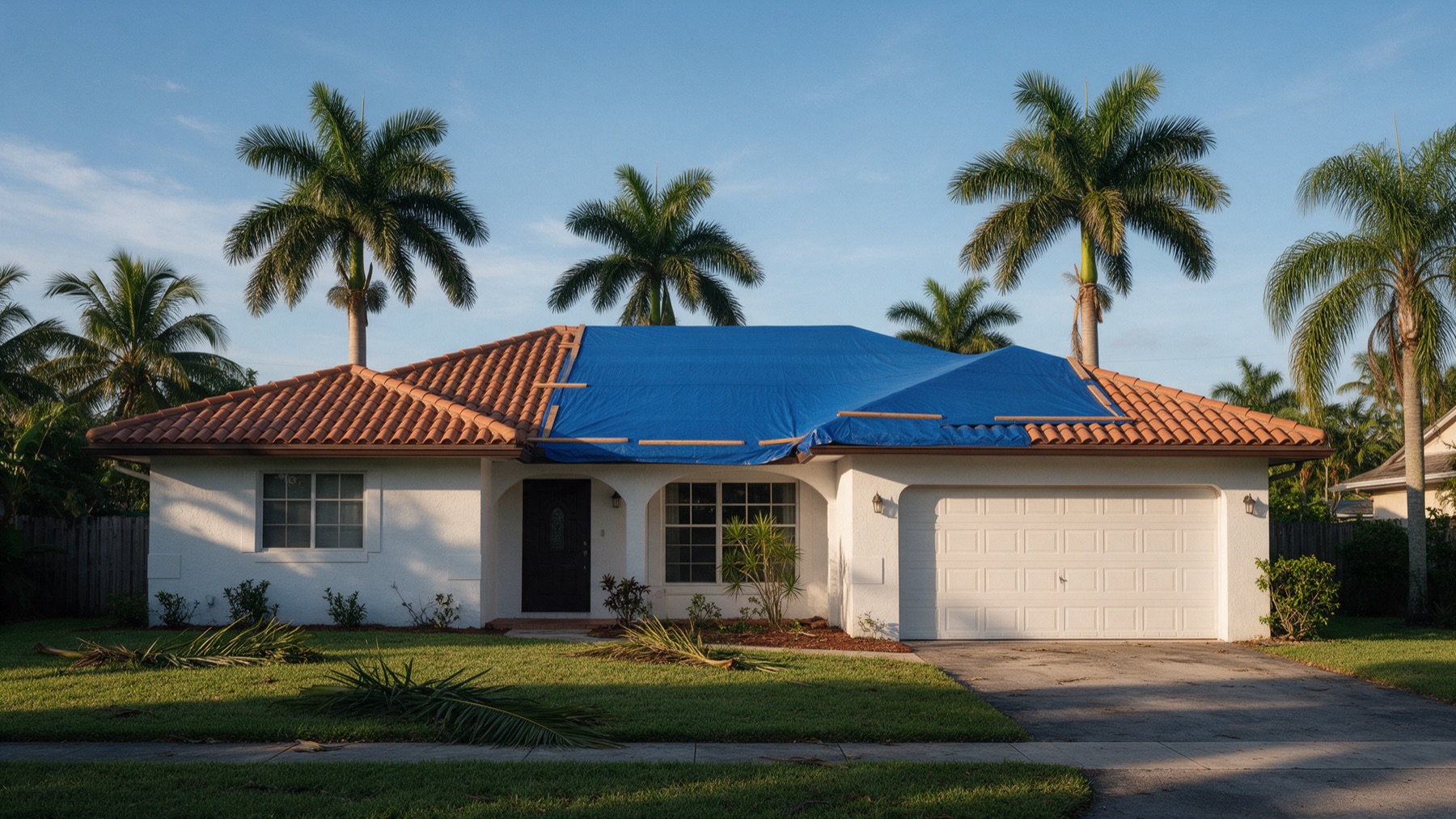
After a hurricane, a blue tarp goes up fast and then gets forgotten. That's the problem. An emergency roof tarp in Miami has to survive afternoon downpours, wind-driven rain and, in a bad season, a second storm, and a tarp that was rushed on can let in as much water as the hole it was covering. This guide shows you how to judge a tarp entirely from the ground, what a sound install looks like on tile and flat roofs, and the point at which you stop looking and call a licensed roofer. You will not need to climb anything, and you shouldn't.
Quick answer: A good emergency tarp is taut, extends well past the damage, runs up and over the ridge so water can't get under its top edge, and is held down by wood strips along its edges rather than a few nails or loose bricks. If it is flapping, pooling water, sagging, or only covers the damaged spot itself, it isn't doing its job. Judge it from the ground and from the attic — never by climbing up, and never by walking on tile.
What you'll need
- Binoculars or a phone with a good zoom
- A flashlight for the attic hatch
- Your phone camera, to photograph the tarp and the ceilings
- The name and license number of whoever installed it
Step by step
- Wait for a safe, dry day. Look only when the wind has dropped, the storm has passed and the ground is dry. Check the National Hurricane Center before you go outside after any storm.
- Walk the perimeter from the ground. Stand back far enough to see the whole roof plane. Use binoculars on each side of the house, the same way we describe in our guide to checking your roof after a hurricane.
- Check the coverage. The tarp should extend well beyond the damaged area on every side, not just cover the hole. On a sloped roof, look at the top edge: it should run up and over the ridge so rain running down the roof goes over the tarp, not under it.
- Look at how the edges are held. A properly secured tarp is held down by wood strips (battens) along its edges. A tarp held by a handful of nails through the sheet, by tape, or by loose bricks and sandbags alone is a temporary-on-temporary fix. Note what you see.
- Watch it in a breeze. A good tarp is taut and quiet. Flapping, billowing or a corner lifting means wind is getting under it, and every gust works it looser.
- Look for water sitting on top. After rain, a sag that holds a puddle adds weight, stretches the sheet and eventually finds a seam or fastener hole. Note where it pools.
- Check the attic from the hatch. With a flashlight, look at the underside of the roof deck under the tarped area. Wet wood, fresh drips or daylight after a rain mean the tarp isn't keeping water out. Stay on the floored area; don't step between joists.
- Check the ceilings below. Compare every ceiling under the tarped area with your pre-storm photos. A stain that grows after a rain is the clearest sign the tarp has failed.
- Photograph everything with the date. Take wide and zoomed shots of the tarp from each side and photos of the attic and ceilings. Keep them with your claim paperwork.
- Recheck after every heavy rain or wind event until the permanent repair is done.
What a good tarp looks like vs a bad one
| What you see from the ground | Likely fine | Needs attention |
|---|---|---|
| Coverage | Well past the damage on all sides | Covers the hole and little else |
| Top edge on a sloped roof | Runs over the ridge | Stops below the ridge, so water runs under it |
| Edges | Wood strips along the edges | A few nails, tape, or loose weights only |
| Tension | Taut, quiet in a breeze | Flapping, billowing, a corner lifting |
| After rain | Sheds water | Puddles in a sag |
| Inside | Dry deck and ceilings | Wet wood, drips or a growing stain |
Why tarping is harder on Miami roofs
Most tarp advice is written for asphalt shingles, where a crew can nail battens through the sheet into the deck. Miami is different.
Tile roofs. Clay and concrete tile cracks under foot and under a hammer. That's why installing a tarp on tile is a job for someone who knows tile — every careless step creates the next leak. It's also why federal help may not fit your house. The U.S. Army Corps of Engineers' Operation Blue Roof, when activated for a disaster, has said in its announcements that roofs made of clay, slate or asbestos tile and flat roofs don't qualify (its 2024 Florida announcements excluded metal roofs too), and that the roof must allow crews to nail the tarp in place. Eligibility is set per disaster, so check the current rules for your storm, but don't count on the program if your roof is tile or flat.
Flat roofs behind parapets. A tarp on a flat section can't shed water the way it does on a slope. If it isn't carried over the parapet or arranged so water drains, it turns into a pond. Watch for sagging and blocked scuppers or drains around it.
Salt air and sun. Tarps are a short-term fix. Sun breaks down the plastic and coastal wind works the fasteners loose. A tarp that looked fine the week after the storm can be failing a month later, which is why rechecking matters.
Permits, contractors and your insurer
The City of Miami's post-storm permitting plan lists temporary tarping of roofs to prevent further damage among work that typically does not need a permit, while roof repair or replacement does. Other cities in Miami-Dade and the county set their own rules, so if you aren't sure, ask your building department. The permanent repair must meet the HVHZ requirements explained in our HVHZ building code guide.
Storm periods bring people offering tarps door to door. Before anyone gets on your roof, check their Florida license on the DBPR license lookup. Get the cost in writing before work starts.
Many Florida policies expect you to take reasonable steps to protect the property from further damage after a loss, and many set rules or limits on what they'll pay for emergency work. What your policy covers is a question for your agent or carrier, not for us. Keep receipts and photos of the tarp work either way.
Safety first
Judge the tarp from the ground and the attic — don't climb up to fix it. Never walk on tile: it cracks, and you make the leak you're trying to stop. A wet tarp is as slippery as ice, and storm-damaged decking can give way. If you use a ladder for any reason, set it on firm, level, dry ground at a 4-to-1 angle, extend it 3 feet above the edge, keep three points of contact and have someone hold it. Never use a ladder in wind, rain or lightning, or when surfaces are wet. Stay well clear of power lines and the service drop, which storms often leave sagging or down. Work early; Miami roof surfaces can exceed 150°F.
Stop and call a licensed roofer if…
- The tarp is flapping, torn, or has a corner or edge lifting
- It stops below the ridge, or only covers the hole itself
- Water is pooling on it, or a flat-roof tarp is holding water
- You see wet decking, drips or daylight in the attic after rain
- A ceiling stain is growing or a ceiling is sagging — keep people out of that room
- Tiles around the tarp look newly cracked or slipped
- The tarp has been on for weeks and the permanent repair isn't scheduled
- Another named storm is in the forecast and the tarp hasn't been checked
A roofer can re-secure or replace a failing tarp and tell you what the permanent repair needs. Our hurricane and storm damage service covers emergency work through to the permitted repair, and our Miami roof cost guide gives planning ranges if replacement is on the table.
FAQ
How long can an emergency roof tarp stay on in Miami?
Only as long as it takes to get the permanent repair done. Sun, rain and wind wear tarps down, so treat it as weeks, not seasons, and recheck it after every storm.
Can I put a tarp on my tile roof myself?
We don't recommend it. Walking on tile cracks it, and nailing through tile breaks it. Have a roofer who works on tile do it, and judge their work from the ground.
Does Operation Blue Roof cover tile roofs?
In past activations, the Army Corps of Engineers said roofs made of clay, slate or asbestos tile and flat roofs don't qualify. Rules are set for each disaster, so check the current announcement or call 1-888-ROOF-BLU.
Do I need a permit for a temporary roof tarp?
The City of Miami lists temporary tarping as typically exempt; the permanent repair needs a permit. Rules vary across Miami-Dade, so confirm with your building department.
Will insurance pay for an emergency tarp?
That depends on your policy. Many have rules or limits for emergency work. Ask your agent or carrier, and keep receipts and photos.
Get the tarp checked
If you aren't sure the tarp on your house will hold through the rest of the season, book a free roof assessment or call 305-419-0890. We'll tell you plainly whether it's holding and what the permanent repair involves.
Sources
MIA Roofers · Roofing performed by Premier Group, Florida Certified Roofing Contractor CCC1332855. This guide is general information, not an inspection of your roof.