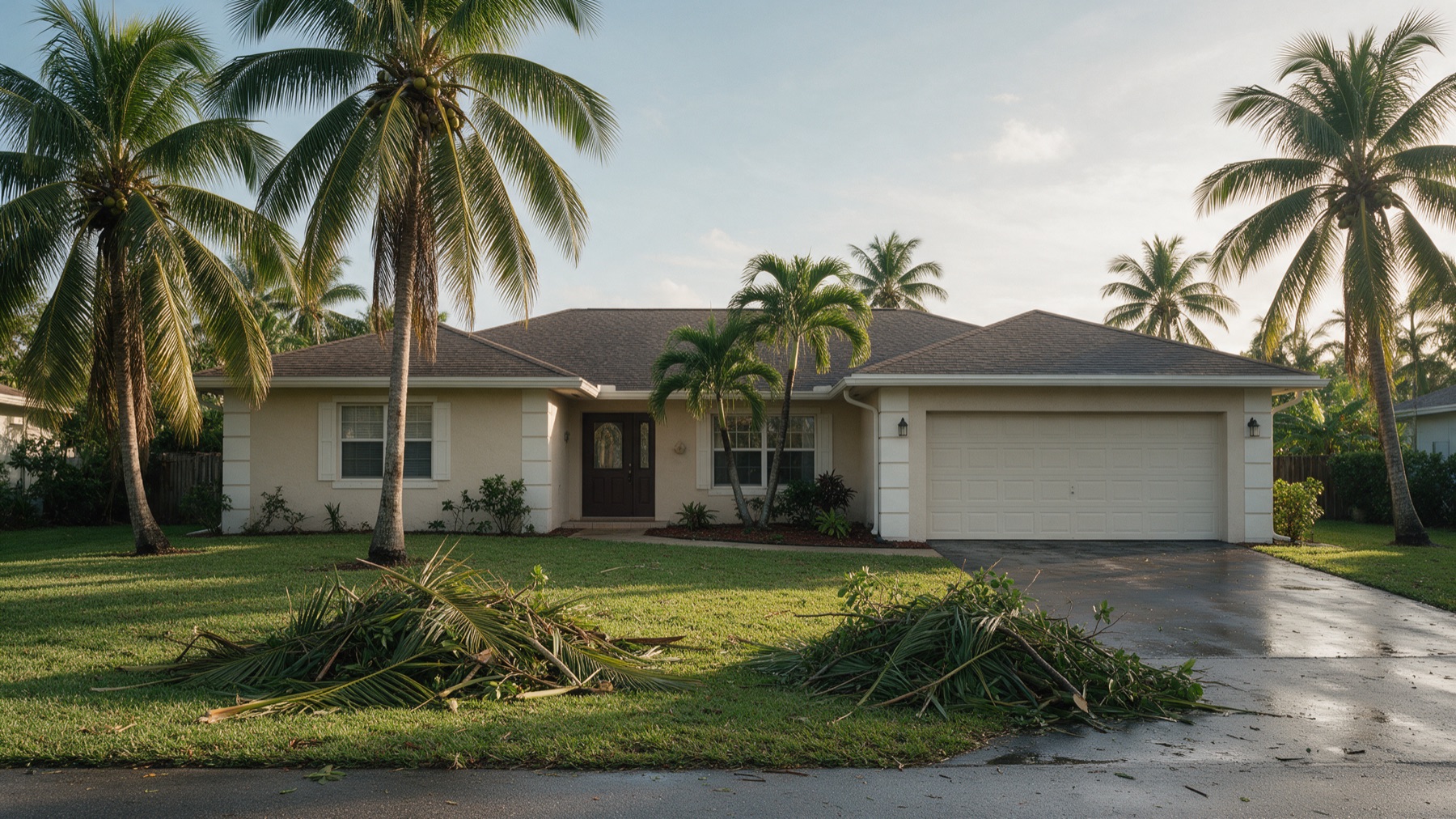
The storm is over, the wind has dropped, and your roof is covered in palm fronds, twigs and a few pieces of something you cannot identify. The instinct is to climb up and clear it. Don't. On a Miami tile roof, the debris is the least of your problems and the person who walks up there is the biggest. Here is what to leave alone, what to check from the ground, and how to get the yard cleaned without making the roof worse.
Quick answer: Leave debris on a clay or concrete tile roof for a licensed roofer to deal with. Your job is to look from the ground for slipped, cracked or missing tile and for branches that have pushed into the roof. Clear the yard, keep the piles off the road, and call for an inspection if anything looks displaced. Never walk on the tile to remove debris.
What you'll need
- Your phone, for photos and notes
- Binoculars or a phone zoom
- A rake and contractor bags, for the ground only
- Nothing for the roof itself. You are not going up there.
Step by step
- Photograph the roof from the street and from the yard before you touch anything. Take wide shots first, then zoom on each roof slope. Date-stamped photos are the baseline if an insurance question comes up later. Our pre-storm photo guide has the routine.
- Check for downed power lines before you go near the yard. Stay well back from any line on the ground or hanging near the house. Do not touch debris that is touching a line.
- Scan the roof with binoculars, one slope at a time. Look for tile that has slipped out of line, tile sitting at an angle, cracked or missing pieces, and any ridge cap that has moved. Debris stuck in the valleys or under the eave is worth noting for the roofer.
- Look for debris that has pushed into the roof. A branch wedged under the tile, a palm frond jammed into a valley, or a limb resting on the ridge can lift tile or dent the roof. Note where it is. Do not pull it free from the roof.
- Look at the gutters and the eave from the ground. A pile of material in the gutter or sagging at the eave tells you where water will back up in the next rain.
- Clear the lawn and driveway only. Rake debris off the grass, walkways and driveway into two piles, one for vegetation and one for everything else. Keep both piles clear of the street, sidewalks, hydrants, utility boxes and storm drains.
- Check the county's rules before you set anything at the curb. Miami-Dade's guidance is not to put trash at the curb, or start tree cleanup, during a tropical storm or hurricane watch or warning. For bulky pickup, call 311 or request it online before a storm threatens. Cities such as Doral run their own programs, so confirm which one applies to your address.
- Call a licensed roofer for an inspection if step 3 or 4 showed anything. Ask for the inspection to be done from the ground first, then from a properly set up access if the roofer needs it. You want a written list of what was found, with photos.
Why debris on tile is different
Clay and concrete tile look heavy, and they are good at shedding water, but the thing keeping the rain out is the underlayment under the tile. Tile sits on top of that membrane, and the membrane is what fails first. A palm frond or a branch dropped onto the roof in a storm can slide a tile out of line, crack the edge of a neighbour, or pin a piece of debris into a lap where water will collect. None of that shows up as a leak on the first day. It shows up in the next squall, usually sideways.
The mistake most homeowners make is trying to clean the roof. Walking on tile cracks it, and the crack you create is the leak you were trying to prevent. A licensed roofer can clear the debris and check the tile underneath as part of a documented job, and will tell you what they found. That is the job to pay for, not a weekend climb with a leaf blower.
Debris also matters on the flat section that most Miami homes have behind the parapet or over a Florida room. Leaves and fronds that block a scupper or drain hold water on the membrane, and standing water is where the early leaks start. From the ground, check whether the scupper is blocked and whether water is standing on the flat roof after the rain stops. The full flat-roof check is in our wind-driven rain guide. Leave the clearing to a roofer.
Palm fronds and branches
Palm fronds are the most common storm debris in South Florida, and they are heavier and stiffer than they look. A frond dropped on a tile roof can rest on several tiles at once and push them out of line. Trimming a palm near the house is a job for a professional tree service that knows how to bring material down safely away from lines and structures. Do not climb a ladder to cut a frond sitting on the roof edge.
Branches that have come down are a different story when they have hit the roof. A branch that has pushed a tile out of position or cracked a ridge cap is a roof repair, and it goes on the roofer's list, not yours.
Safety first
Work from the ground and treat every line as live. Never walk on a tile roof. Tile cracks under foot and creates the leak you were looking for. Do not go on any roof during or right after a storm while it is still unsafe, or when it is wet. Assume every downed line is energized. Never touch, cut, move or pile debris on a downed power line, and keep at least 10 feet from overhead lines. If you use a chainsaw or pole saw in the yard, keep bystanders well back and stay clear of lines. If you use a ladder at all, use firm, level, dry ground at a 4-to-1 angle, extend it 3 feet above the edge, keep three points of contact, have a second person hold it, and never use it on a wet or windy day. Miami heat is dangerous after a storm too: work early, drink water, and stop if you feel dizzy or sick.
Stop and call a licensed roofer if…
- Binoculars show any tile out of line, slipped, cracked or missing on the slope that took the debris
- A branch or frond is wedged under tile, in a valley, or resting on the ridge
- A ridge cap has moved, cracked or come loose
- There is a ceiling stain, a wet attic, or any dripping after the rain has stopped
- Debris or standing water is blocking a flat-section scupper or drain
- A gutter or eave is sagging, pulled away from the fascia or holding a mass of material
- You are unsure whether a line is live or touched the roof. Stay back and call the utility first.
- The yard is covered and you are tempted to climb up to see for yourself. Call instead.
A licensed roofer can clear debris, inspect each tile in place, and tell you whether the underlayment has been damaged. If repair is needed, most Miami-Dade roof work requires a permit, and the licensed contractor should pull it. Confirm the scope with the Miami-Dade permitting office before work starts. Our roof repair service covers the typical job, and a roof inspection gives you a written list of what needs doing. For tile replacement, see our tile roof replacement page. For planning ranges, see the Miami roof cost guide.
FAQ
Can I just blow the debris off my tile roof?
No. Leaf blowers can drive fine debris into laps and valleys, and the work still means being on the roof. Leave it for a roofer who can check each tile as they clear.
Do I need to report storm debris to the county?
Put your yard debris in the two piles and keep them clear of the road. Check 311 or your city's public works office for any current debris program, because pickup rules change from storm to storm and between cities.
Will the insurance claim cover debris damage to my tile?
That depends on your policy and the damage, and it is a question for your agent or carrier, not for a roofing blog. Keep your dated photos and the roofer's written findings, and confirm the claim process with your insurer.
How soon should I get the roof checked after a storm?
Soon, because debris that sits on tile holds moisture and the next rain can turn a small crack into a leak. If you can see anything out of place from the ground, book the inspection before the next squall.
Get the roof checked before the next storm
If your tile roof has debris on it, or anything you saw from the ground looks out of place, book a free roof assessment or call 305-419-0890. We will inspect from the ground, tell you what needs a roofer, and give you a written list before you pay for anything.
Sources
MIA Roofers · Roofing performed by Premier Group, Florida Certified Roofing Contractor CCC1332855. This guide is general information, not an inspection of your roof.